Musée des impressionnismes Giverny
TicketLens lets you:
Search multiple websites at onceand find the best offers.
Find tickets, last minuteon many sites, with one search.
Book at the lowest price!Save time & money by comparing rates.
The Musée des impressionnismes Giverny is not only a home for the great artists of Impressionism but also a destination for plant and nature lovers. In the impressively designed garden, over 22,000 plants can be discovered. By Hannah Gottlieb-Kettl
By Hannah Gottlieb-KettlSelect a date to find available tickets, tours & activities:
Excursions to Giverny from Paris
Plan your day according to your wishes and find the right offer for you here.From Paris: Giverny and Versailles Palace Guided Day Trip
4.5(2689)
Go to offer
From Paris: Guided Day Trip to Monet's Garden in Giverny
4.8(2888)
Go to offer
From Paris: Giverny Day Trip with Audio Guide or Live Guide
4.2(3012)
getyourguide.com
Go to offer
Giverny's House & Gardens plus Versailles Palace Day Trip with Lunch from Paris
4.8(230)
viator.com
Go to offer
See all Excursions to Giverny from Paris
Current exhibitions
Carte blanche to Daniel Buren: Plantations, in situ works, 2026
Upcoming temporary exhibition
This upcoming summer exhibition brings a new Daniel Buren in situ creation from the garden into the museum galleries. The official page says the installation places his striped visual language in dialogue with the Giverny setting and with works from the museum's collection.
Jul 17, 2026 – Nov 01, 2026, Museum garden and galleries
4 tips for visiting the Musée des impressionnismes Giverny
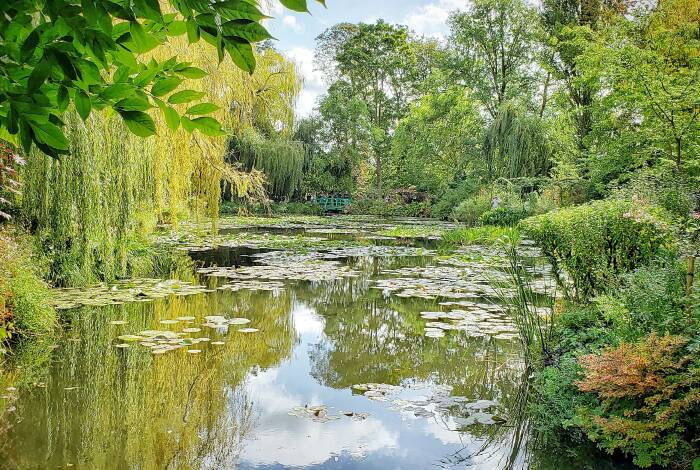 Gardens of Giverny | Photo: Unsplash, Ricardo Isotton
1
Stroll through the garden
The generous garden is designed in sections of different colors and themes. There are numerous places that invite you to admire and linger. Take your time and enjoy the unique atmosphere!
 Bee at work | Photo: Unsplash, Krzysztof Niewolny
2
Stop by
In the middle of the museum garden, you will find the restaurant La Brasserie des Artistes. Here you can enjoy a selection of dishes or your afternoon coffee with a view of the flora and the splendor of the flowers.
3
Find out in advance about temporary exhibitions
Since the museum opens its doors for special exhibitions and at certain times, it makes sense to inform yourself here before your visit. Some first Sundays and heritage days are free, but the eligible months and visitor categories vary by exhibition.
4
Extend your visit
Giverny is located in the beautiful Normandie and therefore has much more to offer. Book a tour and check out Monet's House, the Fondation Monet in Giverny, or the medieval city of Rouen as part of your visit. Normandy will enchant you!
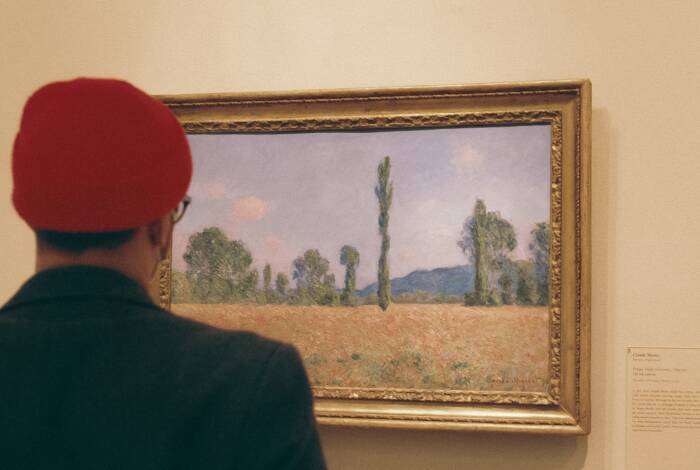
Musée des Impressionnismes Giverny - Nature meets Art
The Musée des Impressionnismes Giverny was initially opened in 1911 as the American Art Museum. In 1992, the architect Philippe Robert was commissioned to transform the historic building into a new museum. Around the gallery that houses the artists of Impressionism, there is a 2.5 hectare impressive garden on the premises, inviting you to marvel and linger.
Nature-oriented architecture
The commission given to Robert Philippe was not only to redesign the museum, but especially to embed it into the surrounding landscape in a way that the architecture remains almost invisible. Since the nature around the museum is laid out in carefully planned terraces, the architect also designed the museum so that it seamlessly integrates into the terrace landscape from above.
The garden
The Museum's garden, growing since 1992, houses over 22,000 plants in all conceivable colors and shapes. It is the result of collaboration between the museum's architect, Philippe Robert, and the American landscape architect Mark Rudkin, who is known for his outstanding work in the gardens of the Palais Royal. Especially impressive is the blaze of color between April and October.
Great Artists
The Musée des Impressionnismes Giverny in its gallery offers changing exhibitions. In addition to general themes like Flower Power or Impressionism and the sea, individual exhibitions are also dedicated to the great artists of Impressionism, such as Monet or Renoir.
Diligent little bees
To make a statement about biodiversity and to preserve species diversity, bees were settled in the Museum's garden in April 2023. The diligent insects take on the important task of pollinating the numerous fruit trees and flowering plants. Maybe you can snag a jar of honey in the shop during your visit?
Frequently Asked Questions
Is the museum accessible for people with disabilities?
The entire museum is accessible to people with disabilities. Wheelchairs can be borrowed for free after prior reservation.
Read more.Can I visit the museum with my toddler?
Strollers are not allowed in the museum's gallery. However, you can borrow a buggy for free - but you need to reserve it in advance.
Read more.May I bring my dog?
Dogs are not allowed in either the museum or the gardens.
Read more.General information
opening hours
The Musée des Impressionnismes Giverny is open daily during its 2026 exhibition periods: March 27 to July 5 and July 17 to November 1. Opening hours are 10:00 am to 6:00 pm, including public holidays, with last entry at 5:30 pm. The galleries are closed July 6-16 for the exhibition changeover and exceptionally on September 4, 2026.
address
Musée des impressionnismes Giverny99 rue Claude Monet27620 Giverny
website
Official site: https://www.museedesimpressionnismesgiverny.com
tickets
For the 2026 exhibitions, on-site admission costs €12 for adults and €9 reduced; online adult/reduced tickets are €13/€10 because of handling fees. Admission is free for visitors under 18 and for eligible categories with valid proof. Free-entry dates vary by exhibition: all individual visitors on the first Sundays of April, May, June, October, and November, plus European Heritage Days on September 19 and 20; Eure residents only on the first Sundays of August and September. Audioguides cost €4 on site.
how to get there
The museum is well accessible by public transport. The train line Paris Saint-Lazare - Rouen stops at the station Vernon-Giverny, which is about 6 km from the museum, where you can switch to shuttle buses or take a taxi. Those who are more athletic can rent a bicycle at the station and ride along the bicycle route Seine à Vélo to the museum. The museum also offers a free parking lot for cars and buses.

Written byHannah Gottlieb-KettlHannah is an enthusiastic globetrotter. Her love of discovering new places has taken her to almost every continent on our planet. Hannah now shares this great passion with the world as a content creator. In her writing, she provides impressive insights and combines her travel experiences with lots of useful tips.
How useful was this page?
Average rating 0 / 5. Vote count: 0.
Compare prices for more top sights in Paris:
Popular attractions
Eiffel Tower ticketsAlcatraz ticketsPark Guell ticketsCatacombs of Paris ticketsUniversal Studios Singapore ticketsPetřín Lookout Tower ticketsMiniaturk – Miniature Park of Turkey ticketsNational Maritime Museum ticketsThe Oval ticketsPiazza Navona ticketsOne World Trade Center ticketsBurj Khalifa ticketsMilan Cathedral ticketsGuinness Storehouse ticketsLast Supper - Santa Maria delle Grazie ticketsMoulin Rouge ticketsGardens by the Bay ticketsStratosphere Tower ticketsDisneyland Paris ticketsDohány Street Synagogue ticketsHarry Potter: Warner Bros Studios tickets
Language
English
Currency© 2020-2026 TicketLens GmbH. All rights reserved. Made with love in Vienna.